Nuclear Accidents
Santa Susana Field Laboratory (SSFL)
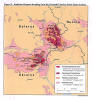
The Santa Susana Field Laboratory is a 2700-acre tract in Ventura County, California owned and operated by the Rocketdyne Division of Boeing. NASA owns and operates about 450 of these acres. The laboratory was founded in a sparsely populated area in the 1940’s, as a government facility for the testing of nuclear reactors and rockets. Only about 30 miles north of Los Angeles, the surrounding area is now densely populated. The site has been used for some ten experimental reactors, as well as, rocket and missile tests. In addition, the facility has made use of an open-air burn pit to dispose of both chemical and radioactive wastes. The reactors at SSFL did not have the huge concrete dome containments, familiar sites at modern power plants; they did not have any containment structures because they were “experimental.” SSFL has been the site of several fires and reactor problems through out the years. The most notable accident was the partial meltdown of the SRE reactor in July of 1959.
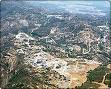
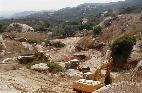
In the last ten years, a great deal of public concern has arisen over the radioactive and chemical pollution caused to the surrounding area by the SSFL and the necessity for clean up at the site itself. Much controversy surrounds all aspects of these problems and the difficulty of who should pay for what.

Table 2. Chronological List of Radiological Incidents in Area IV of the SSFL.
|
Date |
Description
of Incident |
|
March 25,
1959 |
AE-6
Power Doubling Excursion |
|
June 4,
1959 |
SRE Wash
Cell Explosion |
|
July 13,
1959 |
SRE Power
Excursion |
|
July 26,
1959 |
SRE Fuel
Damage "Meltdown" |
|
March 19,
1960 |
SRE Steam
Cleaning Pad Contamination |
|
1964 |
SNAP 8
(S8ER) Fuel Element Failures |
|
1969 |
SNAP 8
(S8DR) Fuel Element Failures |
|
May 19,
1971 |
Hot Lab
NaK Fire in the Hot Lab Decontamination Room |
|
November
3, 1976 |
Radioactive
Material Disposal Facility Leachfield Contamination |
|
Table
4. Community Health Concerns Related to the Santa Susanna Field Laboratory |
|
|
Many
people expressed concerns about |
|
|
Some
people expressed concerns about |
|
|
A few
people expressed concerns about |
|
|
Table
5. Community Environmental Concerns and Observations |
|
|
Many
people expressed concerns about: |
|
|
A few
people expressed concerns about: |
|
Previous tables
were excerpted from an Agency for Toxic Substances and Disease Registry
report. This agency got involved in the
SSFL investigations in 1999.
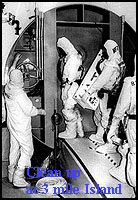
Three Mile Island
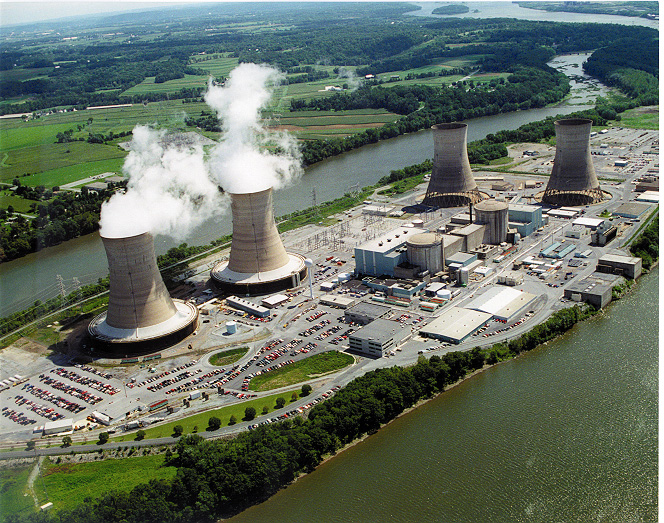
At 4 a.m., on March 28, 1979, near Harrisburg, Pennsylvania, a
malfunction in the steam generator’s feed water system occurred. An
overlooked valve was left closed leaving the generator dry. Thus, the
primary water coolant temperature and pressure increased to about 2,355 psi
(pounds per square inch) causing a relief valve on the pressurizer to
open. The release valve stuck open unnoticed allowing coolant to escape
to a quench tank for two hours. This now radioactive coolant was
eventually leaked to an uncontained area, outdoors. Fortunately, our
engineers reacted quickly to minimize the effects preventing a full
meltdown.
At first,
the public was told that everything was under control, but the engineers
realized that the situation was more complex. The next day they were still
having difficulties stabilizing the plant and cooling the reactor down. By the third day, a gas “bubble” had
developed causing worry about a possible explosion and, thus, the venting of
radioactive gases into the atmosphere. The health and ecological effects of this “venting” are still highly
controversial.
It was difficult
to assess the actual damage to the core and many thought that it was minimal. It
took several years and the help of sonar and video inspection to determine the
extent of meltdown and damage. According
to Smithsonian, National Museum of American History, “By the end of 1986 it was
indubitable that much of the core had melted, but it would be two years and
more before it was clear what a serious danger that had occasioned.”
PBS TMI Animation http://www.pbs.org/wgbh/amex/three/sfeature/tmiwhat.html

Chernobyl
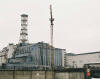
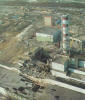
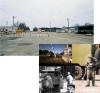
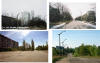
On April 26, 1986, shortly after 1:00 a.m., a Russian scientist performing an authorized experiment put the reactor in an unstable state and caused the nuclear meltdown of the Chernobyl-IV reactor. An explosion took place, blowing a hole in the roof of the reactor housing and the 1,000-ton steel roof off of the containment building and the plume of radioactivity went an estimated 7 kilometers up into the atmosphere. The graphite modulator and the core then caught fire and sending even more radioactive material up into the atmosphere. According to the Washington Post, 30 to 40 times as much radioactivity as the Hiroshima and Nagasaki atomic bombs combined in 1945 was released into the atmosphere. Some estimates put the amount of radioactivity released as high as 200 times the combined World War II bombs. It is believed that 30 people died immediately, but many more as time went on. Mercifully, the meltdown occurred at night when fewer workers were present and people living in the vicinity were in their homes, giving them at least some shelter from the radioactivity. The number of civilian and workers that died due to radiation poisoning is still unknown. Presently, the city of Chernobyl is a nuclear wasteland. This not only affected the immediate area, but most of the world.
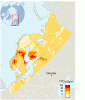
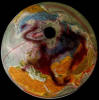
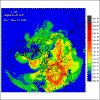
The Soviet Union at the time was not quick to announce the accident to people in the surrounding area, let alone to the world. In fact, the world became aware of the accident because Sweden registered grave concern when routine radiation measurements for test ban treaty compliance the following afternoon were showing high levels of radiation. A few days later, on May 2, winds brought the radiation to the British Isles. Most of Europe, from Greece to Scotland, received significant fallout from the accident. The radiation was spread by air currents, which circulated radiation across the globe.
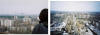
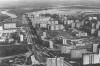
Many civilians of Chernobyl escaped death, however, many of them continue to live with the effects of radiation damage and their offspring carry the horrific aftermath of the reality. The citizens of the area were not evacuated until a few days after the accident. Then, they were given short notice, no explanation, and could take only a few things with them. Over 300,000 people were evacuated and resettled. Many workers had to stay and help with the clean up, often working close to the reactor without the protection of radiation suits. The ground, vegetation, and livestock were all affected and still are. The rain was radioactive and, of course, the water supply. Pripyat, once a city of about 50,000 people, most employed at the power facility is a ghost town. The 50 km radius around Chernobyl is a nuclear wasteland.
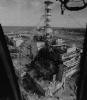
In the early days after the meltdown, workers boxed and buried chunks of the core thrown out in the explosion. Much of the debris was bulldozed and buried. Many tons of uranium and probably a ton of plutonium were estimated to still be in the reactor. With the lid blown off the reactor, something had to be done to enclose the “hot” debris. The Soviets built a huge “sarcophagus” or “envelope” out of concrete and steel to entomb the damaged reactor. The “sarcophagus” was never meant to be a permanent solution and the international community has responded by funding an enormous permanent and very costly shelter for the reactor, scheduled for completion in 2007.
A very interesting site about Chernobyl,
complete with video (Take time, 27 min., to watch the video.): BBC World’s Report on Chernobyl
Additional Picture Site: http://www.ccp-intl.org/fusco/images_flash1.html


|
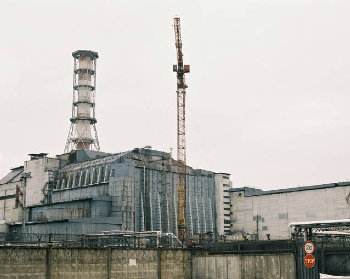
Sideview of reactor
Braidwood, IL
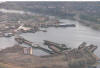
In 1998, contaminated (with tritium) water flowed down a
five-mile ravine to the Kankakee River.
In addition to contaminating the Kankakee River, 3 million gallons of
tritiated water spilled, contaminating the ground water supply. This occurred again in the year 2000. Eight years after the first spill, the
public is leaked the information. Exelon
Corp., owners of Braidwood Nuclear Power Plant, replied on Wednesday (1-25-06)
that “they should have acted much sooner after millions of gallons of
water containing radioactive material spilled … outside the company's nuclear
plant in Braidwood.”
Illinois Attorney General Lisa Madigan and Will County
State’s Attorney James Glasgow are suing Exelon Corporation for the tritium releases,
alleged to have occurred as early as 1996 and as recently as March 13, 2006.
Additional Information Site: http://www.nirs.org/radiation/tritium/tritiumnews.htm